
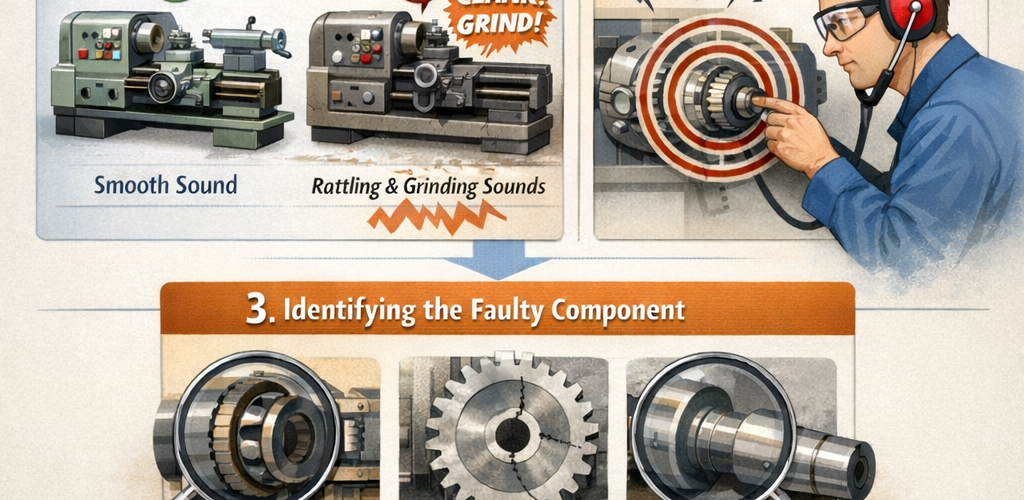
Diagnosis of Abnormal Noise in Machine Tools
Diagnosis of Abnormal Noise in Machine Tools
During operation, a machine tool normally produces a uniform, continuous, and slight sound, which is generally considered normal. If the sound becomes excessively loud or is accompanied by metallic knocking, rubbing, or scraping noises, it indicates abnormal operation. Such sounds are referred to as noise or abnormal noise.
Abnormal noise is mainly caused by wear, deformation, fracture, looseness, or corrosion of machine components, which leads to collision, friction, impact, or vibration during operation. Some abnormal noises indicate that a certain component of the machine tool has already failed, while others may serve as early warning signs of more serious accidental damage. Therefore, the diagnosis of abnormal machine tool noise must not be neglected.
1. Identifying the Type of Abnormal Noise
When diagnosing abnormal noise in machine tools, the differences between new and old machines should be taken into consideration. New machine tools generally have good technical conditions and produce no mixed or irregular sounds during operation. Once abnormal noise occurs due to a specific cause, it is usually clear and simple, making analysis and diagnosis easier.
For older machine tools, natural wear gradually deteriorates their technical condition. Increased clearances between moving parts lead to more complex and mixed sounds during operation. Therefore, it is necessary to first determine which abnormal noises must be diagnosed and eliminated.
2. Locating the Source of the Abnormal Noise
A machine tool consists of numerous interconnected components. When one component produces abnormal noise, the sound may be transmitted to other parts, making it easy for operators to misidentify the actual fault location. In such cases, the source of the abnormal noise should be determined based on the operating condition of the machine tool.
For example, if abnormal noise occurs in the machine tool gearbox, the specific location of the noise can be judged according to variations in sound intensity under different operating conditions.
3. Identifying the Faulty Component
Abnormal noise in machine tools varies depending on the shape, size, material, operating condition, and vibration frequency of the faulty component. In practice, careful analysis of different types of abnormal noise is required. With accumulated experience, the patterns of abnormal noise can be identified and mastered.